
Ralstonia solanacearum sensu lato (comprising R. solanacearum and R. pseudosolanacearum) is a soil-borne, Gram-negative β-proteobacterium responsible for bacterial wilt in a wide range of plants. It has an extensive host range, affecting more than 450 plant species across 54 botanical families, including several economically important crops. The hosts vary from herbaceous plants to shrubs and even trees.
This pathogen is regarded as one of the most destructive plant bacteria due to its high aggressiveness, wide geographical distribution, and ability to persist in soil and water for long periods. It occurs in tropical, subtropical, and temperate regions worldwide and poses a serious threat to crops belonging to the families Solanaceae, Musaceae, and Zingiberaceae. Major susceptible crops include potato, tomato, chilli, sweet pepper, tobacco, groundnut, banana, brinjal, ginger, turmeric, and Heliconia.
Conventional methods for managing bacterial wilt have achieved only limited success, and the disease continues to be a significant constraint in crop production.
Eco-Friendly Solution for Bacterial Wilt Management
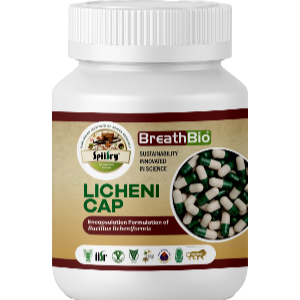
An environmentally safe and effective approach involves the use of the beneficial bacterium Bacillus licheniformis. This bioagent helps manage bacterial wilt in crops such as ginger while also promoting plant growth and vigor. It can be incorporated as part of an integrated disease management strategy for better results.
The formulation is available in bio-capsule form and can be applied both as a seed treatment and through soil drenching.
Benefits of LICHENI CAP
- Protects plants against major soil-borne pathogens
- Eco-friendly and sustainable solution
- Convenient to handle, store, and transport
- Reduces labour requirements due to easy application and low dosage
- Stable under room temperature conditions
- Suitable for application through drip fertigation systems
Guidelines for Using Bio Capsules
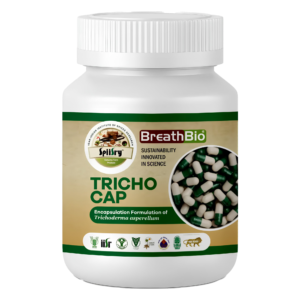
a) Application methods vary between bacterial and fungal capsules; ensure correct identification before use.
b) Solutions prepared from fungal capsules should be used within 2 hours.
c) For bacterial capsules (such as Bacillus and Azotobacter), dissolve one capsule in 1 litre of sterile (boiled and cooled) water and incubate for 6–8 hours, stirring occasionally (2–3 times) for uniform growth.
d) After incubation, dilute the solution in 200 litres of clean water for field application.
e) Apply when the soil has sufficient moisture and organic matter content.
f) Avoid mixing with chemical fertilizers, pesticides, wood ash, or lime.
Reviews
There are no reviews yet.